
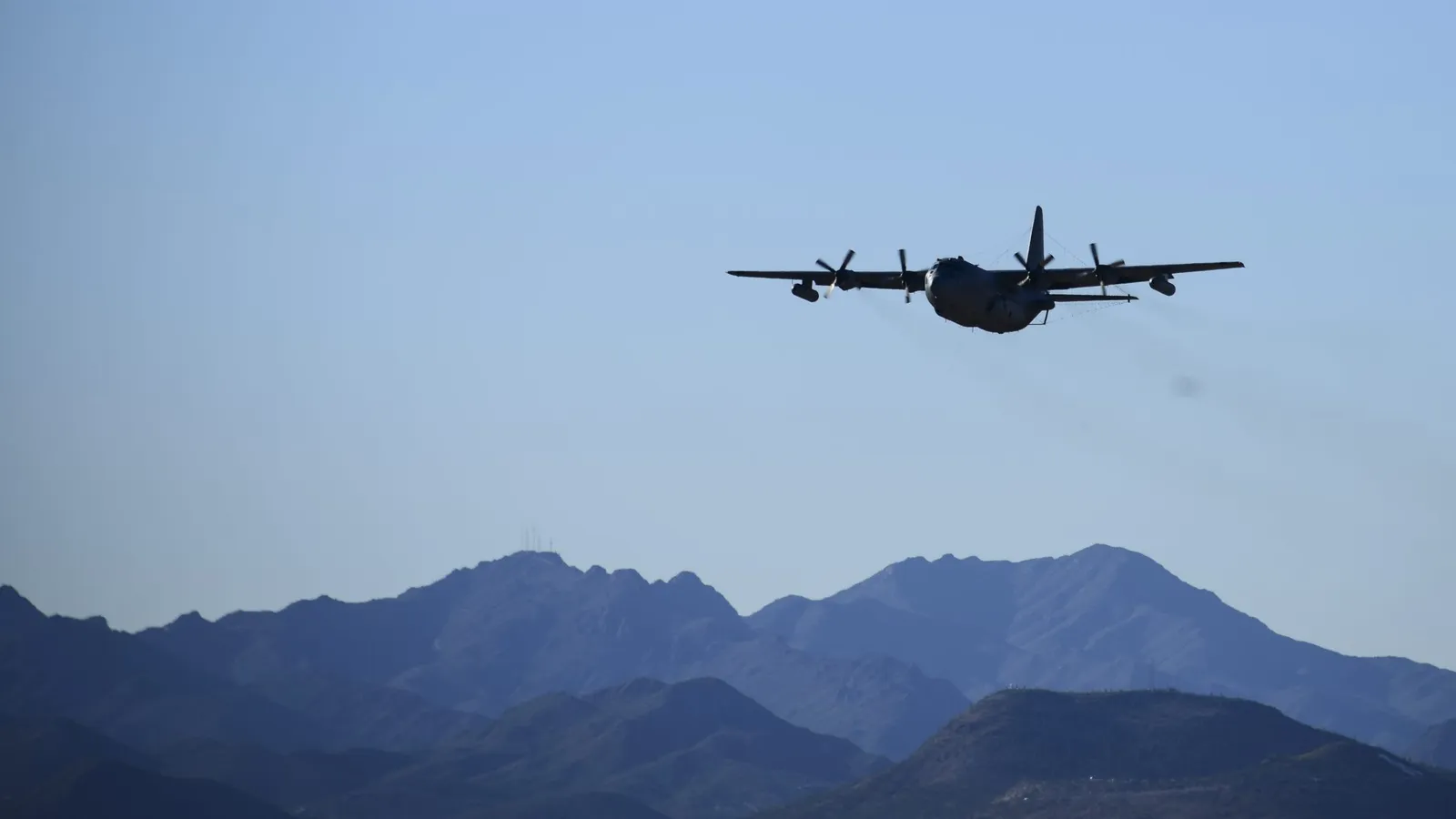
Sept. 18, 1947, marks the day our youngest military branch flew the Army coop and became its own independent branch of the United States military. Now, hundreds of thousands of men and women pride themselves on being a part of the US Air Force and work selflessly every day to ensure the safety of those back home. While support from the sky has been around for many years, it wasn’t until recently that a single branch was given charge over air combat.
Air support during wartime in America began as early as the Civil War with the use of hot air balloons. Both sides utilized the balloons in reconnaissance, giving them a bird’s-eye view of the battlefield and enemy locations. Because of its use of these balloons, the Army Signal Corps took over aviation advances within the Army, resulting in the purchase of the Army’s first aircraft from the Wright Brothers. The plane was known as the Signal Corps No. 1, or the Wright Military Flyer, and was used in training new pilots before it was retired to the Smithsonian.
When America joined the fight in World War I, it did so with a single air unit, the 1st Aero Squadron. The unit was small with very few planes to offer support. Upon the realization that America was ill equipped for air support during the world war, funding was authorized to increase training and plane production. The 1st Aero Squadron was used mostly in reconnaissance, relaying information on enemy locations. According to Airman Magazine, it even had 13 aerial victories and served in several campaigns.
During World War I, the 1st Aero Squadron increased in size, but after the war it was quickly reduced. Though the war was over, the fight for an independent branch dedicated to patrolling the air had just begun. It wasn’t until 1926, eight years after the end of World War I, that the Air Corps was formed and commanded by Gen. Henry H. Arnold, a student of the Wright Brothers. While it was still not an independent branch, it had the same status as Artillery or Engineer branches.
World War II gave the Air Corps its second big expansion, building its forces to over 2,400,000 men and women and 80,000 aircraft. The name of the Air Corps was changed to Army Air Forces, and the reorganization was instrumental in opening the doors for bombing units. The Army Air Force was broken down into 16 numbered air forces, two of which participated in the bombing of Germany.
Once World War II came to an end, military officials realized the importance of having a separate branch to handle offensive and defensive missions from the air. In 1947 the United States Air Force joined the ranks with the Army, the Marines, and the Navy. Since its formation, the Air Force has presented a formidable force, serving in the Korean War and again in the Vietnam War. During the Persian Gulf War, the US Air Force struck again and with a brand-new weapon, the fighter plane. In response to the Global War on Terror following the events of 9/11, the Air Force focused on perfecting precision-guided smart weapons for the fighting in Afghanistan.
From hot air balloons that contributed mostly in observation tactics, to F-22s that are primed and ready for the offensive, the United States Air Force has come a long way from its humble beginnings. The advances the branch has made are far from over, with a constant need and drive to expand aerial power to protect the American people. While it is the youngest branch, the Air Force has proven itself time and time again as a formidable and successful opponent.